Mirador de La Tarta is one of those Tenerife stops that can look too small on a route plan. It is a roadside viewpoint, not a grand excursion, and nobody needs half a day for it. Still, on the right Teide drive, it gives a sharp little lesson in the island's geology, weather and altitude before everyone gets distracted by the bigger names higher up the road.
Where the viewpoint fits into a Teide day
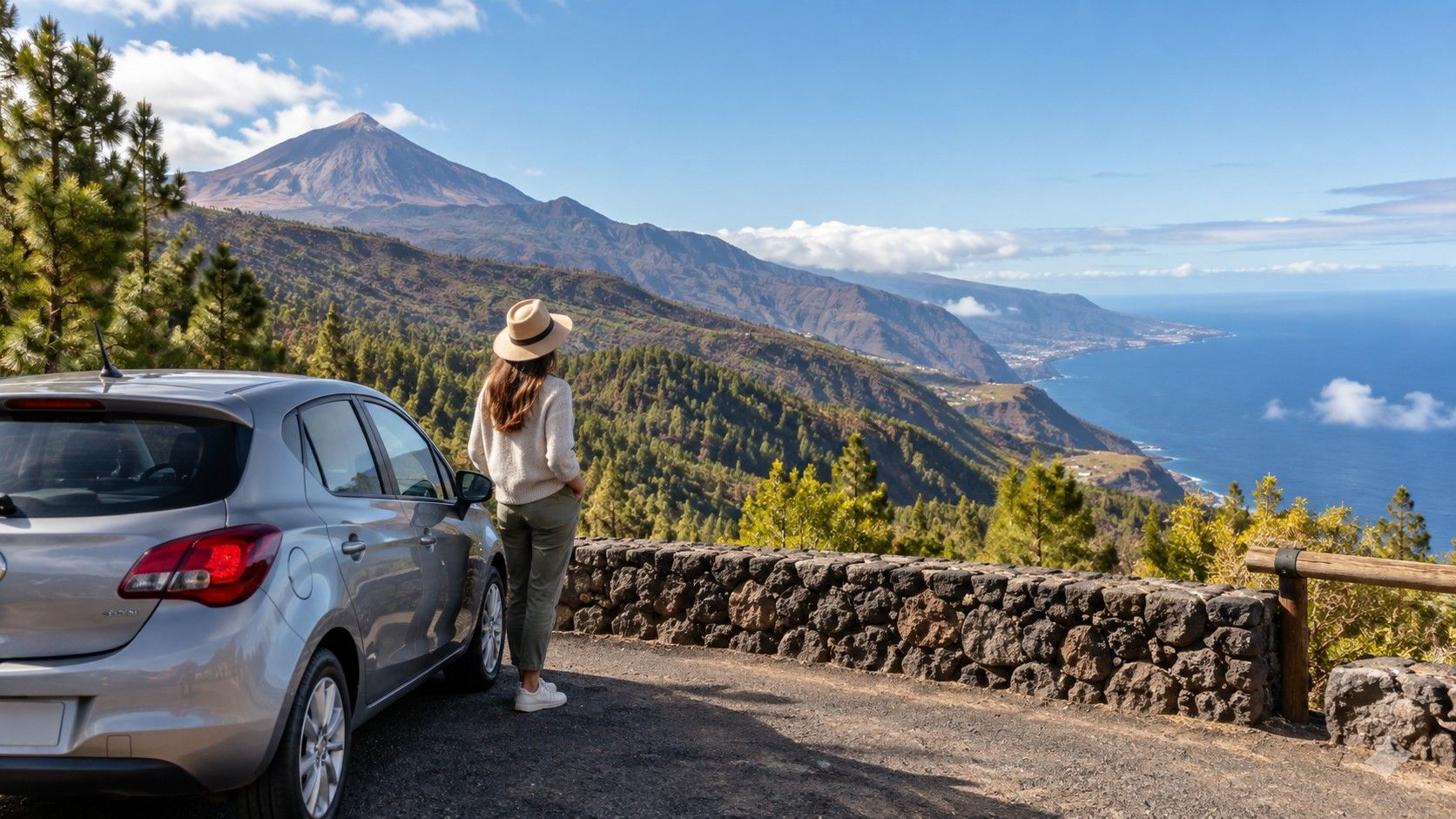
Mirador de La Tarta sits on the Teide approach where the road has already climbed out of ordinary coastal Tenerife and into a more exposed mountain mood. I would treat it as a planned stop on a Teide driving day rather than a destination by itself. It works best when you are crossing the island by car and want the climb to feel like a sequence instead of a long approach to one famous crater landscape.
The stop makes most sense if you are driving through the high roads around Teide National Park, especially when coming from the north or moving between the greener slopes and the volcanic interior. It gives the day a pause before the national park scenery takes over completely. I like that because Teide trips can become strangely top-heavy: everyone talks about the cable car, Roques de Garcia and the summit, while the road itself quietly does half the work.
Do not build the whole day around this one viewpoint. Build the day so that Mirador de La Tarta lands at a useful moment: after a stretch of climbing, before a longer high-altitude section, or when the driver needs a calm place to reset. It is a stop for looking, breathing, taking the island in layers, and then moving on before the road rhythm goes flat.
The landscape you are looking at
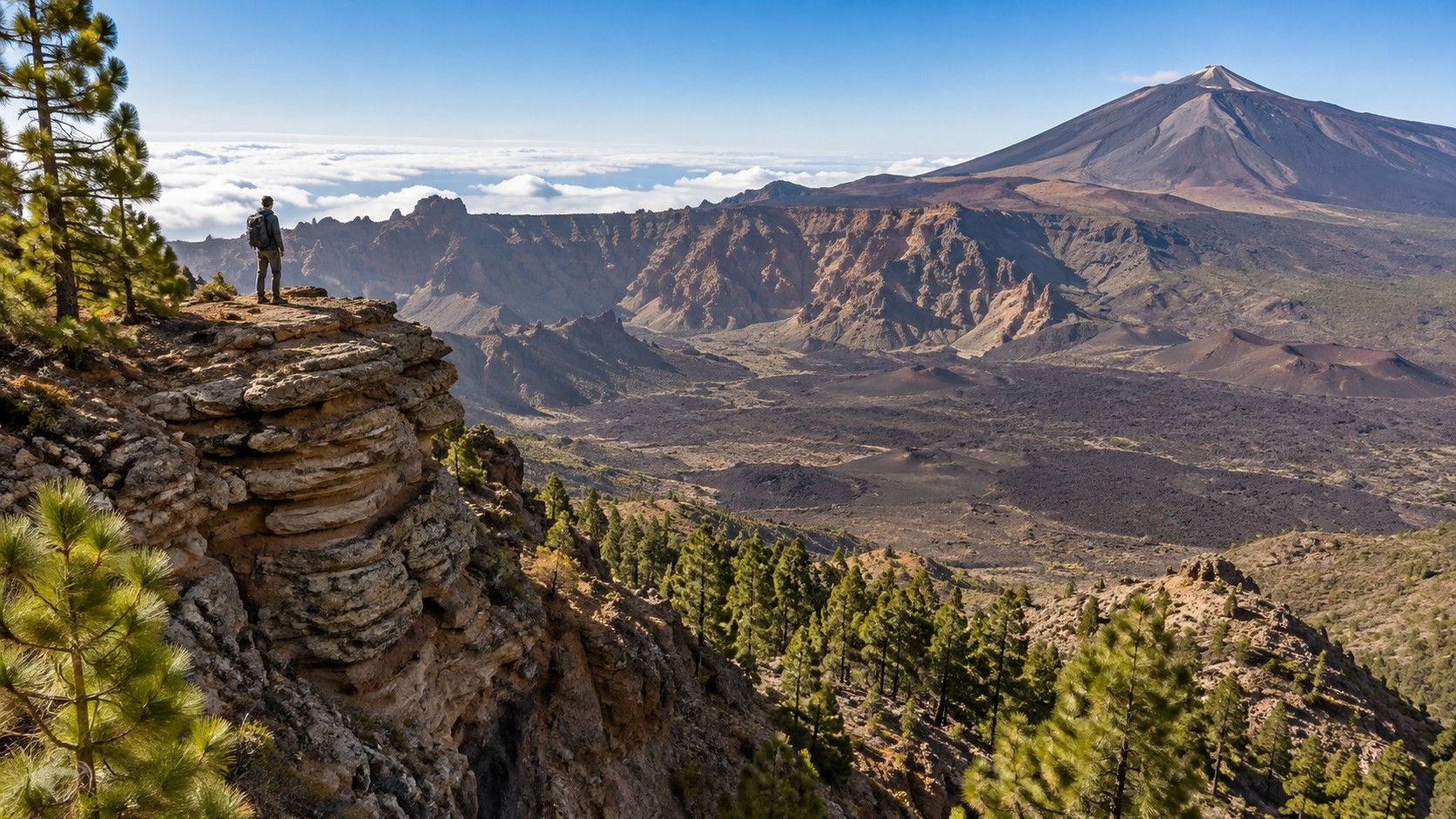
The name points to the layered volcanic colours that make the slope look cut through, with bands of reddish, pale and darker material stacked in a way that feels almost too neat. The cake comparison is easy, but the view is better when you ignore the cute name and pay attention to the contrast. Pine forest sits nearby, the road carves through altitude, and the volcanic layers show that Tenerife was not assembled in one tidy gesture.
I find this more interesting than some larger viewpoints because it is specific. You are not just staring at a wide view and searching for the right adjective. You can see the structure of the ground. The colours, the exposed cut and the surrounding forest give the stop a practical clarity: this is what the island is made of, and the road has opened it for a few metres.
It also explains why Teide days feel so varied. A morning can begin near a warm southern beach, pass through dry slopes and pines, then arrive among volcanic forms that belong to a different temperature and mood. Mirador de La Tarta is a small stop, but it catches that transition. If someone in the car has been wondering why the route takes so long, this is a good place to let the landscape answer.
Timing and light matter more than the length of the stop
You do not need long here. Ten or fifteen minutes can be enough if visibility is good and the parking area is not crowded. The mistake is arriving when everyone is impatient, cold or already late for a booking. A viewpoint is only pleasant if the day has enough slack for it. Otherwise it becomes a photograph grabbed through a car door while the driver keeps one eye on the clock.
Morning light can be kind to the textures, especially when the air is clear after a fresh start from the north. Later in the day, haze or cloud can flatten the colours, though the stop may still be useful as a break. I would not chase perfect light with military seriousness, but I would avoid burying the viewpoint at the end of an overstuffed Teide itinerary when everyone has stopped seeing anything properly.
Weather is the other piece. At altitude, the temperature can surprise people who left the coast in beach clothes. Wind can make a short stop feel shorter. Cloud can move fast. Keep a layer within reach rather than packed under luggage, and accept that the viewpoint may be a quick look rather than a lingering pause. Tenerife often teaches modesty that way.
| Situation | How I would use the stop | What to avoid |
|---|---|---|
| Clear morning drive | Pause for colour, photos and a driver reset | Rushing because the day was packed too tightly |
| Cloud moving through | Wait a few minutes if the road feels safe | Standing near traffic while visibility drops |
| Family Teide day | Use it as a short, easy geology stop | Turning it into a long roadside lecture |
| Long cross-island route | Break the climb before the national park | Skipping every stop until passengers are tired |
| Late afternoon return | Stop only if everyone is still alert | Forcing one last viewpoint in poor light |
Combining it with nearby Teide stops
Mirador de La Tarta pairs well with a Teide day that has two or three proper anchors rather than a dozen tiny obligations. Roques de Garcia is the obvious larger stop inside the national park. The contrast is useful: La Tarta gives you the layered road cut and forest edge, while Roques de Garcia gives the open volcanic basin and the more familiar postcard scale.
If you are driving from the north, La Orotava can sit earlier in the day, though I would not linger there too long before the mountain road. If you are crossing toward the south, the route can continue through the high park and descend later toward Vilaflor. That descent is beautiful, but it still asks for attention. I would avoid adding Masca or a far west-coast plan to the same day unless the group genuinely enjoys long drives and early starts.
The best combinations leave room for weather decisions. If the high road is clear, continue deeper into Teide National Park. If cloud or fatigue starts shaping the day, use Mirador de La Tarta as one of the satisfying stops already completed and simplify the rest. There is a quiet pleasure in not needing every named viewpoint to justify the drive.
Small safety and comfort checks
This is a roadside viewpoint, so the ordinary rules matter. Park only where the stop clearly allows it, step out carefully, and keep children close without turning the moment into a panic exercise. People get casual at viewpoints because the view pulls attention away from the road. I am more relaxed after everyone is fully off the tarmac and the driver has stopped trying to photograph and manage the car at the same time.
Shoes do not need to be technical, but slippery sandals are annoying on uneven ground. A jacket helps more than sunscreen at certain times because altitude and wind change the mood quickly. Water is still worth carrying. The Teide road can make people feel cooler while the sun keeps working, which is a slightly unfair combination.
For photos, I would take a few and then actually look. The layered wall is the point, not the proof that you stopped there. If the area is busy, wait a moment rather than edging into someone else's frame or standing where cars need space. Roadside patience is dull advice, but it keeps the stop pleasant for everyone.
Who should make time for Mirador de La Tarta
I would make time for Mirador de La Tarta if you are already driving through the Teide high roads, if you enjoy seeing the physical layers of a landscape, or if the route needs a gentle stop before bigger volcanic scenery. It is especially good for travellers who find endless panoramic viewpoints repetitive. Here, the interest is close and readable.
I would not detour far for it if your day is already strained. If you have a cable car booking, a lunch plan, a nervous driver and a late start, La Tarta becomes optional. The stop is best when it fits naturally, not when it becomes another pin to defend. Tenerife has enough mountain road without inventing extra pressure.
That is why I like it. Mirador de La Tarta does not need to be oversold. It is a short, specific road stop on Teide where the island shows its layers plainly. Give it a little time, keep the plan loose, and move on before the simple pleasure of the place gets crushed under itinerary ambition.