Ten days in Tenerife sounds generous until the island starts arguing with your plan. Teide may sit under a clean blue sky while Anaga is wrapped in cloud, the south can feel too easy to leave, and one ambitious driving day can turn into three hours of hairpins and a silent car. I would treat the trip as a loose route with a few fixed anchors, not a campaign to collect every viewpoint.
Choosing one or two bases without making the island feel like homework
For a first trip, I like a split stay: five or six nights in the south or south-west, then three or four nights in the north. It is not the only way to handle 10 days in Tenerife, but it saves you from pretending that Los Cristianos, Anaga and Garachico are casual neighbours. The island is compact on a map and less compact once you add mountain roads, parking and the slow business of leaving a resort area after breakfast.
The south works well for the first half because arrival is usually easier there. Costa Adeje, Los Cristianos and Playa de las Americas have the predictable pieces: beaches, restaurants open late, supermarkets, rental desks and short taxi rides from the south airport. That predictability is useful at the start. I do not find it romantic, but I do find it practical when a flight lands late and nobody wants to decode a mountain village in the dark.
The north gives the second half a different mood. Puerto de la Cruz, La Orotava or a rural base near Tacoronte make Anaga, La Laguna, Icod de los Vinos and the greener coast feel less like a special expedition. The trade-off is weather. The north can be cooler and cloudier, and that is part of the point. If you want every evening in a T-shirt beside a polished promenade, stay south and drive out. If you want the island to feel less packaged, give the north a few nights.
The first two days should be deliberately ordinary
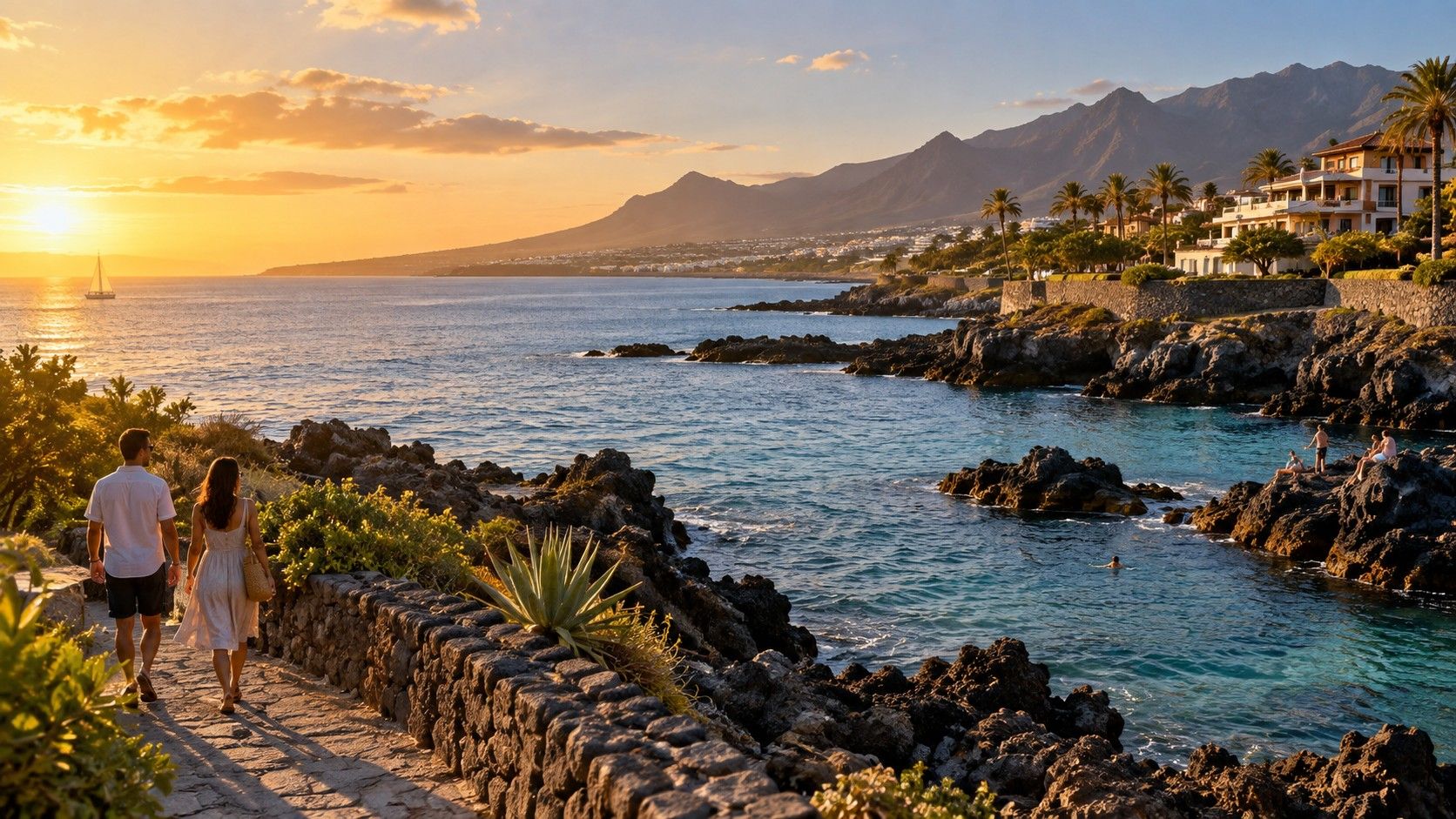
I would keep day one almost embarrassingly simple: arrive, check in, walk to the nearest stretch of sea, buy water, and learn the shape of the area. The mistake is trying to make the first evening count too hard. Tenerife does not reward tired efficiency. A short walk along Playa del Duque, Playa de Las Vistas or the Los Cristianos harbour does more for orientation than a rushed sunset chase.
Day two can be a south coast settling day. Choose one main beach and one easy walk rather than a loop of five stops. In Costa Adeje, that might mean a morning swim near Fanabe, lunch away from the front row if prices look silly, and a late walk toward La Caleta when the light softens. In Los Cristianos, I would use the harbour and Las Vistas as the spine of the day. It gives you a realistic sense of distances, crowds and where you might want dinner later in the trip.
This is also the day to sort out practical things without letting them become the day. If you are renting a car, check the collection time, deposit rules and fuel policy before the mountain day. If you are not renting yet, compare whether you really need the car for the whole trip or only for the middle stretch. I have seen people pay for a car that spends three days trapped in resort parking while they walk everywhere.
A Teide day needs space on both sides
Teide is the obvious centrepiece, but I would not place it on the morning after arrival or the final day before a flight. Weather, road closures, tiredness and cable car plans can all interfere. Give Teide a proper day in the middle of the trip, and keep the evening before quiet enough that you are willing to start early.
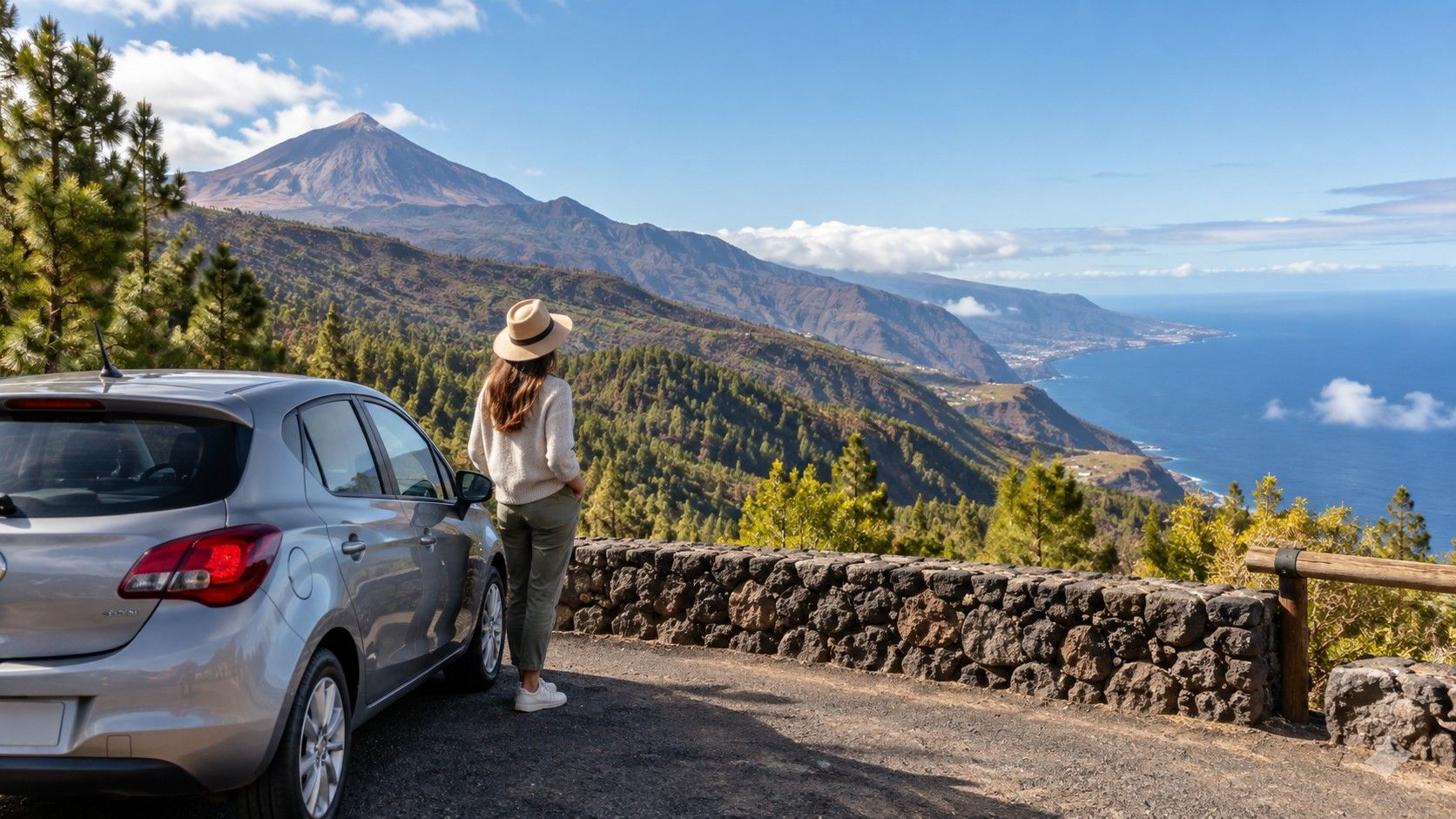
From the south, the Vilaflor road is a satisfying climb because the landscape changes in stages: dry coast, pine forest, thinner air, then the pale volcanic plain around Las Canadas. I would stop at viewpoints, but not at every lay-by with two cars already hovering. Roques de Garcia deserves time because it gives a clear sense of scale without asking you to hike far. If you plan to use the cable car, build the day around that booking and accept that the summit area has its own rules and weather.
The best Teide day has an escape route. If cloud sits low in the north, stay high longer and return through Vilaflor. If the high road feels too busy or windy, make the route shorter and spend the afternoon at a beach instead of forcing a grand circuit. I would rather have three calm hours in the national park than eight hours of box-ticking with someone in the passenger seat quietly regretting breakfast.
| Day | Main idea | Why it fits |
|---|---|---|
| 1 | Arrival and local walk | Low effort, useful orientation |
| 2 | South coast beach day | Settles rhythm before driving |
| 3 | Teide from the south | Big anchor with weather buffer |
| 4 | Los Gigantes or Masca area | Dramatic west coast, slower roads |
| 5 | Flexible rest day | Absorbs cloud, fatigue or missed plans |
| 6 | Move north | Changes base without wasting the day |
| 7 | La Laguna and Anaga edge | Cooler, greener, less resort-like |
| 8 | Anaga or north coast | Use the clearest weather window |
| 9 | Garachico, Icod or Puerto de la Cruz | Good slower finale |
| 10 | Airport buffer | No risky cross-island dash |
Los Gigantes and the west coast are better when you do less
A west coast day looks simple: Los Gigantes cliffs, maybe a boat trip, maybe Masca, maybe a black-sand beach. The road and the heat usually edit the plan for you. I would choose either a Los Gigantes harbour and beach day, or a mountain-road day around Santiago del Teide and Masca, not a heroic combination of everything with lunch squeezed into a petrol station.
Los Gigantes is worth seeing because the cliffs have real weight from sea level. The town itself is small and can feel tight for parking, so arriving early helps. If the sea is rough or boat plans fall apart, do not treat the day as spoiled. Walk the harbour, look back at the cliffs, then move slowly toward Playa de la Arena or Alcala. The west coast is good for unhurried late afternoons, when the light starts doing half the work.
Masca is a different kind of day. The road is narrow, scenic and not relaxing if the driver dislikes bends. I would go early, keep stops short where parking is awkward, and resist adding a long list of extras. It is a place where one good coffee with a view can feel more memorable than three rushed viewpoints. If anyone in the car is already tense after the first set of bends, that is information, not weakness.
Moving north changes the trip instead of extending the resort week
The transfer day is a good chance to make a useful diagonal across the island. Leave the south without drama, stop at La Orotava or Puerto de la Cruz, and let the north arrive gradually. La Orotava has steep streets and old houses that ask for slower walking. Puerto de la Cruz is more lived-in than the southern resort strip, with sea pools, a working town feel and weather that can change the colour of the day every hour.
I would not overfill the first northern day. Check into the new base, find parking, and walk without demanding revelations. The north often works by accumulation: a damp stone street, a cafe full of regulars, a sudden view of banana terraces, a wave hitting the rocks harder than expected. If you have spent several days in the south, the contrast is sharp enough without adding a forced itinerary.
Day seven can belong to La Laguna and the edge of Anaga. La Laguna is cooler, flatter and easier on the nerves than the mountain roads, so it pairs well with a light forest or viewpoint stop if the weather is decent. I would carry a layer even if the coast is warm. The shift from beach clothes to misty road is one of Tenerife's little traps, and it catches people who plan the island from hotel-pool temperature.
Anaga and the final days need weather judgement, not optimism
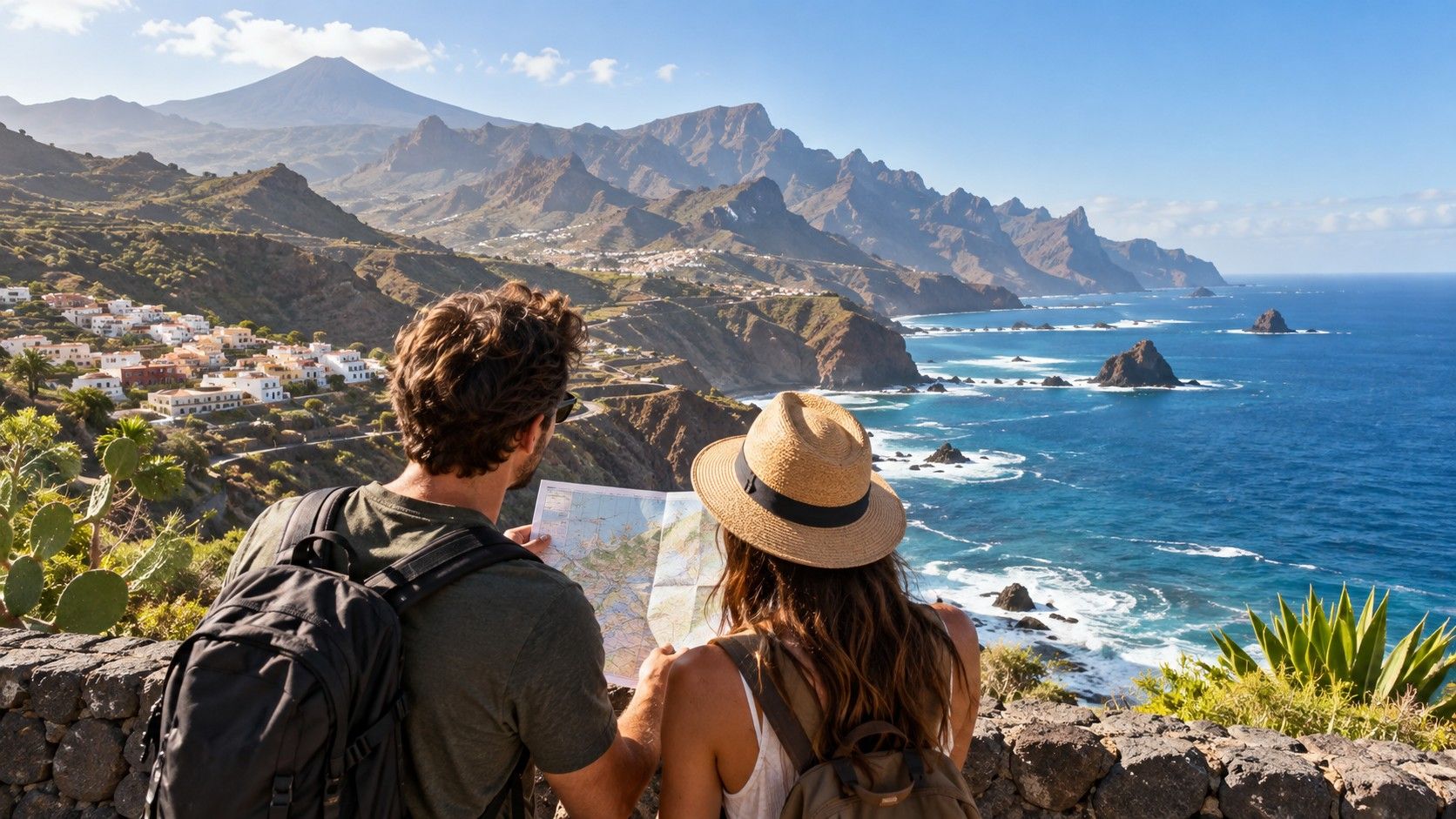
Anaga is the part of Tenerife where rigid planning feels most foolish. The roads are narrow, the cloud can be beautiful or merely inconvenient, and viewpoints may show either a green ridge or a white wall. Keep two possible versions of the day: a proper Anaga drive if visibility is good, or a lower north-coast day if the mountains are socked in.
For the full Anaga version, start early from La Laguna, drive toward Cruz del Carmen, and continue only as far as the day feels pleasant. Taganana and Benijo are tempting names, but the return road takes attention. I would rather leave one beach unseen than crawl back in the dark after a late lunch. If the weather is poor, use the day for La Laguna, Bajamar, Punta del Hidalgo or a shorter forest walk. You still get the north-eastern mood without pretending the cloud is part of a master plan.
The final full day should stay flexible. Garachico, Icod de los Vinos and Puerto de la Cruz make a good slower trio if you are based in the north. If you are back in the south, choose one last beach, one proper meal and an early packing hour. Tenerife punishes the final-day dash because airport roads, rental returns and cross-island drives have no interest in your holiday narrative.
That is the main reason I like a 10-day route with slack in it. You can still see Teide, Anaga, Los Gigantes, a south coast base and the greener north, but you are not asking every day to perform. The island is more enjoyable when the plan has enough gaps for wind, cloud, tired legs and the occasional decision to do absolutely nothing for an afternoon.