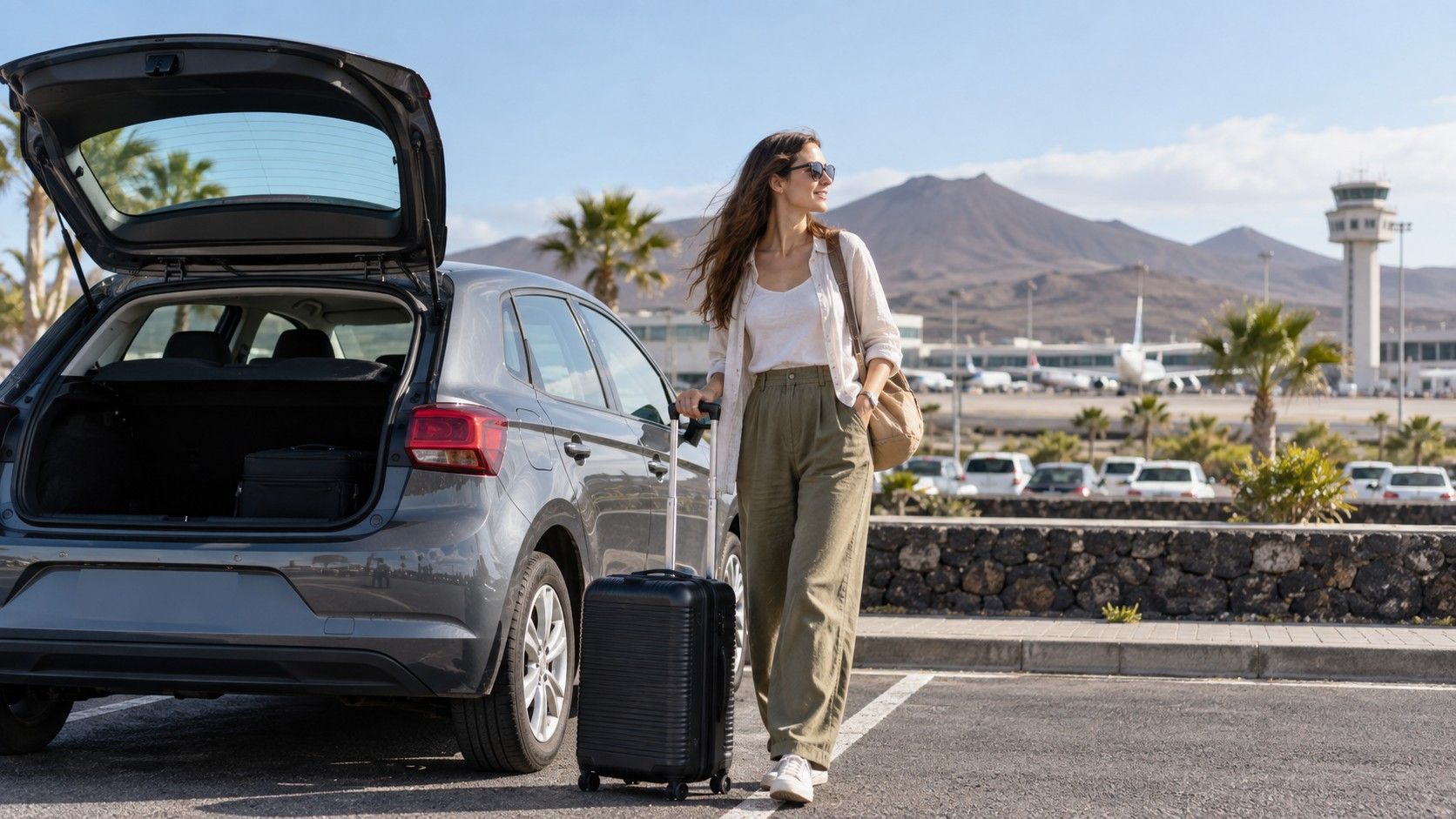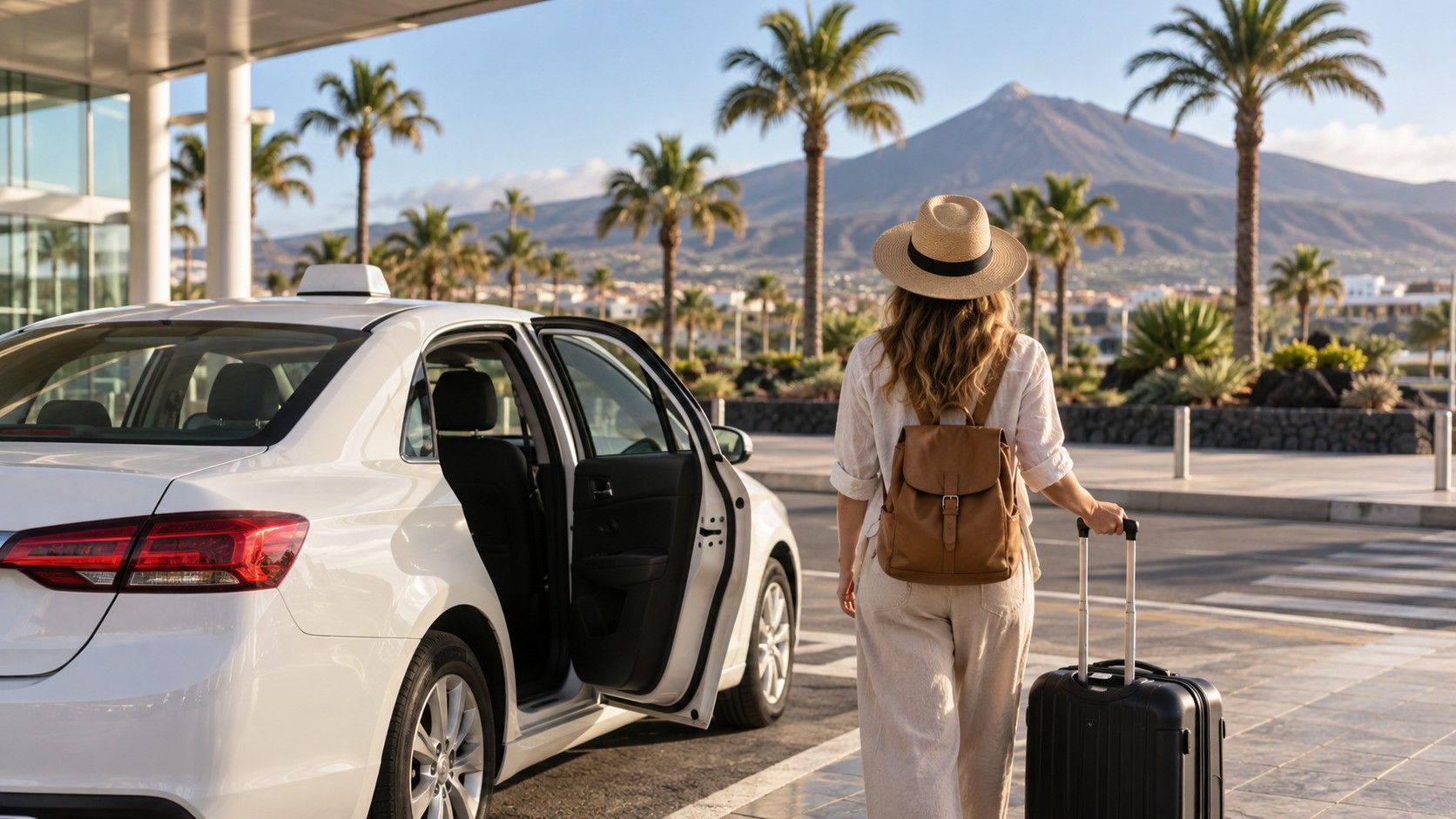
Tenerife airport taxis are not the most glamorous part of the trip, which is exactly why I like deciding on them before landing. The tired moment outside arrivals is a poor time to compare transport theories. A taxi can be the cleanest choice for a late flight, a family with bags, or a resort stay where a rental car would spend three days waiting in a garage.
Which airport changes the decision first
Tenerife has two airports, and the taxi conversation starts there. Tenerife South Airport is the one most holiday arrivals use, especially for Costa Adeje, Los Cristianos, Playa de las Americas and the south-west coast. It is set up for resort transfers, so the taxi rank usually feels like part of the normal arrival machinery: bags out, queue forward, car away.
Tenerife North Airport has a different feel. It is more useful for La Laguna, Santa Cruz, Puerto de la Cruz and some inter-island or mainland connections. If you land there expecting a quick hop to Costa Adeje, the map will correct you. The drive south is a proper cross-island move, not a small airport shuttle. That is where people sometimes realise too late that the cheaper flight has bought them a longer transfer.
I would check the airport code before comparing anything else. It sounds basic, but Tenerife trips are full of small assumptions: south coast hotel, north airport arrival, late landing, two suitcases, no appetite for bus changes. In that situation a taxi is less about luxury and more about removing the first piece of friction from the trip.
The trips a taxi handles well
A taxi works best when the destination is straightforward and the first day does not require freedom. Tenerife South Airport to Costa Adeje is the classic example. You land, follow the arrivals flow, and let someone else handle the last stretch while you remember which pocket holds the hotel address. For Los Cristianos or Playa de las Americas, the logic is similar: short enough to feel sensible, simple enough that a rental car is not automatically needed.
Families often get real value from that simplicity. Children, pushchairs and soft bags have a way of making even a short transfer feel longer. I do not romanticise taxis, but I do respect a door-to-door arrival when everyone is hot, hungry and slightly stunned by the airport lighting. It can also be the better choice for travellers who plan to stay in one resort area and take only one or two organised trips.
The same applies to late arrivals. Collecting a rental car after a delayed evening flight can be perfectly fine, or it can become a slow little test of patience: queue, paperwork, scratches, car park, unfamiliar roundabouts. If the first night is in Costa Adeje or another southern resort, I would rather sleep, then decide the next morning whether the car is actually needed.
| Arrival situation | Taxi usually suits | Rental usually suits |
|---|---|---|
| Late flight to a south coast resort | Simple door-to-door arrival | Only if driving early next morning |
| Family with several bags | Less airport handling stress | Useful for a multi-base route |
| One-week beach stay | Good if most days are local | Better for several independent day trips |
| North airport to far south | Comfortable but a longer ride | Worth comparing if keeping the car |
| Mountain or rural base | Works if the address is clear | Better if exploring starts immediately |
When a rental becomes better value
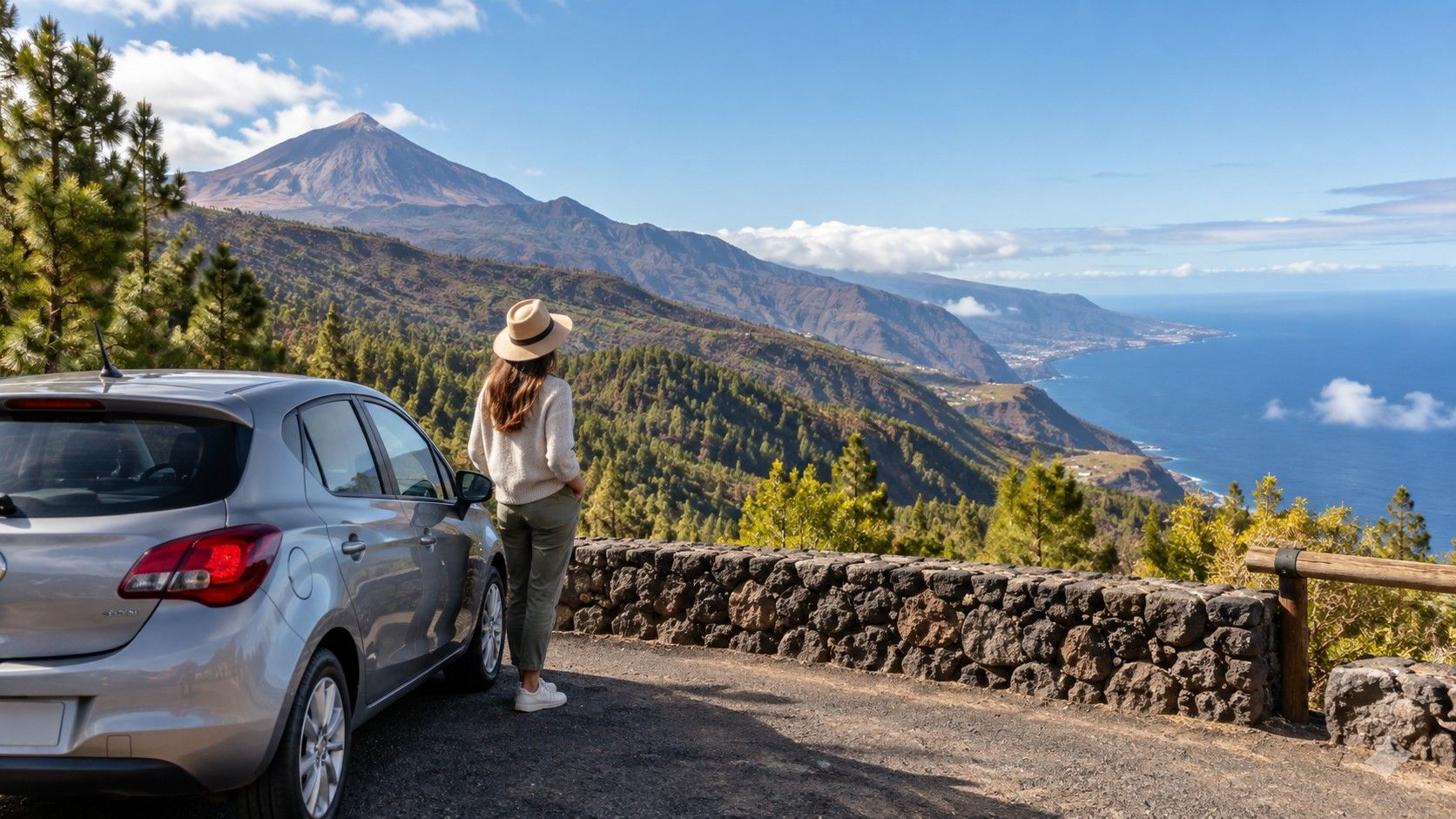
The car begins to win when the holiday depends on movement. If the plan includes Teide, Anaga, Garachico, Masca, several beaches and a base outside the main resorts, paying for taxis every time starts to look clumsy. Tenerife rewards independent driving when you want early starts, viewpoint stops and the freedom to leave a place before the bus timetable agrees.
The question is whether you need the car from the airport itself. I often separate the two decisions. Take a taxi on arrival, settle in, then collect a car for the middle days. It avoids the tired first drive and reduces wasted rental days if the first part of the trip is just beach, food and local walking. It also means you can choose a rental location near the resort rather than treating the airport as the only sensible place to begin.
A rental makes strongest sense for a two-base trip. If you are moving from Costa Adeje to Puerto de la Cruz, La Orotava or a rural northern stay, the car becomes both transfer and tool. In that case, airport pickup may be convenient, provided the driver is comfortable starting on unfamiliar roads. I would still avoid planning a mountain route directly after a long flight. Tenerife will still be there after breakfast.
Arrival timing, luggage and the small traps
The most useful preparation is not complex. Have the hotel name, full address and area ready offline. Resort names repeat, apartment blocks can sound similar, and a tired traveller saying a half-remembered name through a phone screen is not a robust navigation system. If the accommodation is in a gated complex or on a small road, save a nearby landmark as well.
Luggage matters more than people admit. A couple with hand baggage has a different transfer problem from four adults with large suitcases and beach gear. If the group is large, check whether one normal taxi is realistic or whether a bigger vehicle is needed. At the rank, staff can usually direct the queue, but the mood is better if you already understand the constraint instead of discovering it while blocking the line.
I would also keep a little margin for the return journey. The drive to Tenerife South Airport from nearby resorts is often straightforward, but resort traffic, hotel checkout delays and forgotten passports do not care about averages. From Puerto de la Cruz or the north, the route deserves more respect. It crosses more of the island, and weather or traffic can turn a neat calculation into a nervous silence.
Planning the return before the holiday eats your attention
The return transfer is where taxi plans often become vague. On arrival, the rank solves the problem for you. On departure, you need a pickup time, an exact address and enough margin to avoid turning the last morning into a small domestic drama. I would arrange it the day before, especially for early flights or accommodation away from a main hotel front.
Hotel reception can often help, and so can a local taxi phone number or app if you have one available. For apartment stays, I prefer confirming the pickup point in plain terms: main entrance, named street, nearby shop, visible gate. Tenerife has many resort complexes where the pedestrian entrance and the car entrance are not the same thing. That distinction feels minor until the taxi is waiting on the other side of the building.
If you are returning a rental car instead, leave time for fuel, queues and the little inspection ritual. I have seen people plan the airport return as if the car disappears by magic at the terminal door. It does not. A taxi is attractive here because the last hour becomes simpler: bags in, airport out, no fuel gauge discussion. It is not always cheaper, but it can be calmer.
How I would choose without overthinking it
For a short south-coast stay, I would take a taxi from Tenerife South Airport and rent a car only for a specific day or two if the urge to explore survives the beach. For a ten-day island route with Teide and the north included, I would either collect a car after the first night or use it for the transfer between bases. For a late arrival, I would lean taxi almost every time, because the first evening is rarely improved by paperwork.
For Puerto de la Cruz, La Laguna or Santa Cruz, the choice depends more on airport and plans. Tenerife North Airport to those areas is simple enough by taxi if you are staying local. Tenerife South Airport to the north is a longer transfer, so I would compare it against the value of keeping a rental for several days. The car becomes easier to justify when it replaces multiple journeys, not when it sits parked because the old town is nicer on foot.
The point is not that Tenerife airport taxis are always the sensible option. They are a tool for specific moments: tired arrivals, luggage-heavy groups, resort holidays and returns where calm matters. A rental car is better when the route needs freedom. The mistake is treating either choice as a badge of travel skill. The right answer is the one that makes the first and last hours of the trip less annoying.