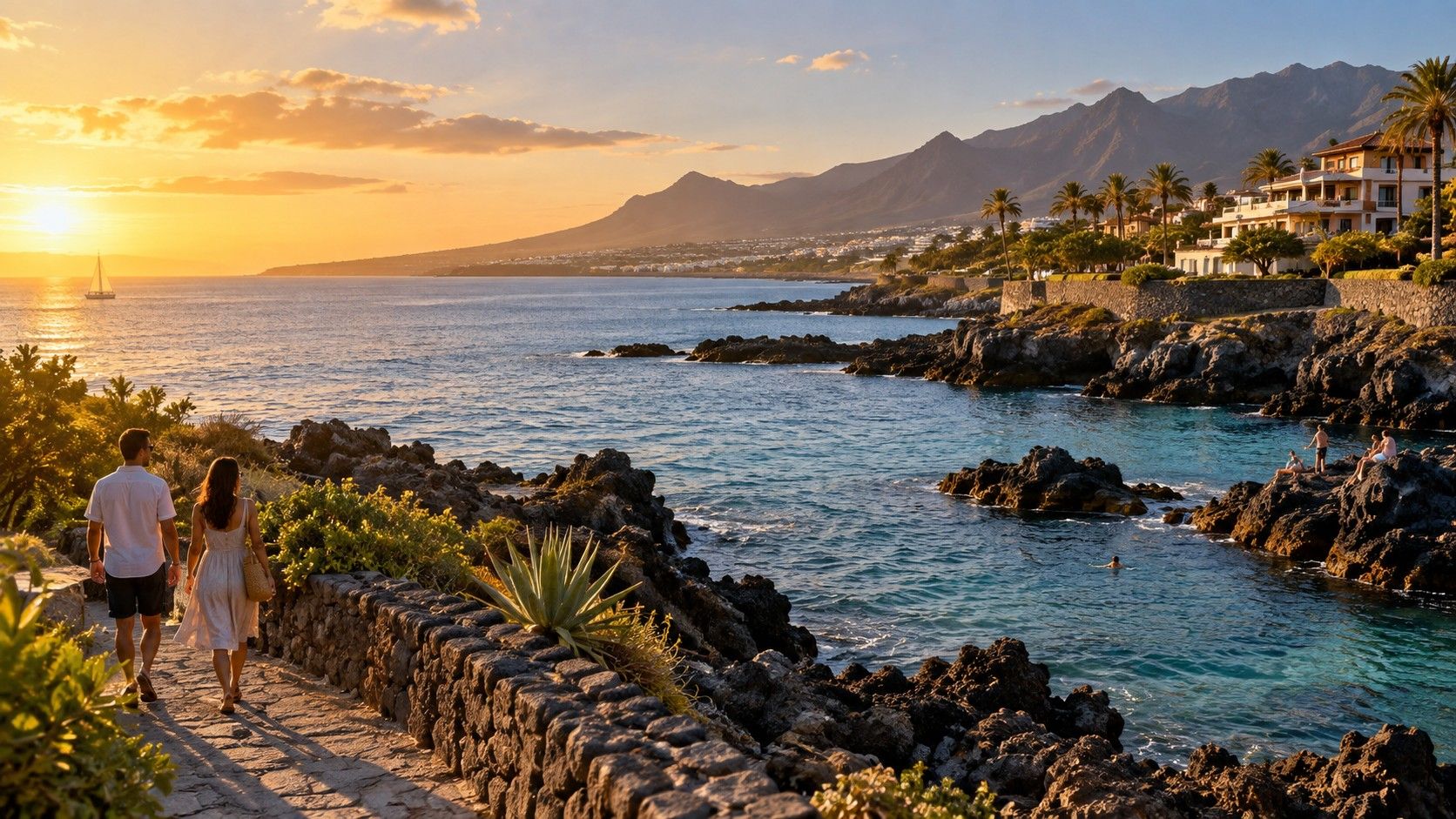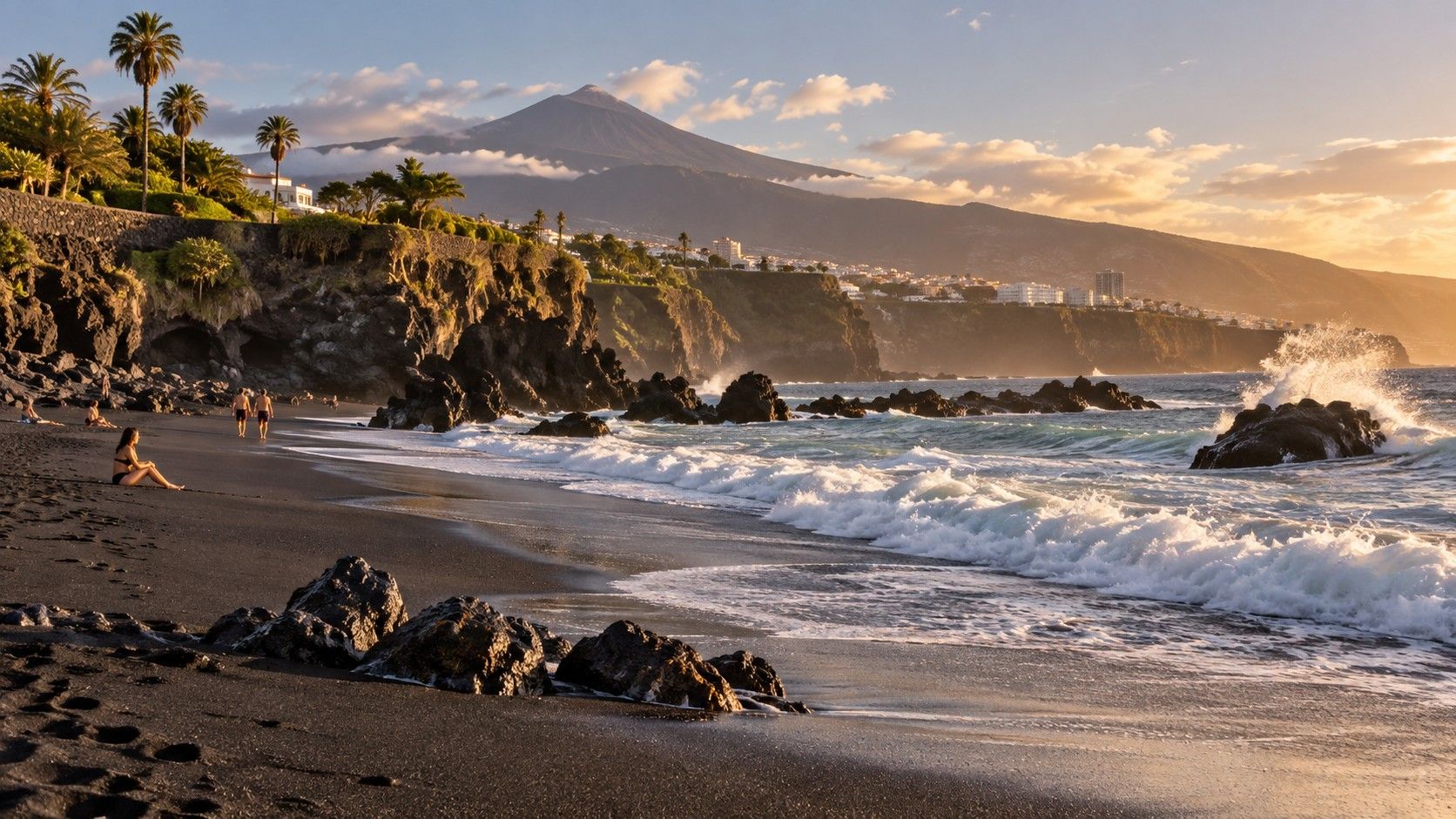
A Tenerife black sand beach can look dramatic in photos and slightly less romantic when the sand is hot, the sea is restless and someone has forgotten footwear. The black sand beaches Canary Islands visitors talk about are part of the volcanic character of the island, but they are still real beaches with waves, wind, facilities, parking and good or bad swimming days. I would plan them for texture, not for a guaranteed lazy postcard afternoon.
Why the sand is black and why that matters
The dark sand comes from volcanic rock broken down over time. On Tenerife, that gives several beaches a heavier, darker look than the pale resort beaches many visitors expect. It photographs well because the contrast is strong: Atlantic water, black or charcoal sand, green edges in the north, and sometimes the blunt geometry of breakwaters or cliffs nearby.
The practical difference is heat and feel. Dark sand can get very hot under a strong sun, especially around midday. Walking barefoot from towel to water can become a small tactical operation rather than a graceful beach moment. It can also cling differently to wet skin and towels. None of this ruins the experience, but it does make sandals, a thicker towel and a less fragile beach bag feel sensible.
I also find black sand changes the mood of a beach. It feels less soft-focus than pale sand. Playa Jardín near Puerto de la Cruz, for example, has a designed promenade and planting, yet the dark shore and Atlantic energy keep it from feeling too polished. That balance is why many people include at least one black sand stop among the best beaches in Tenerife, even if they spend most swimming time elsewhere.
Playa Jardín is the easiest north-coast introduction
Playa Jardín is usually the most straightforward black sand beach for visitors staying in or passing through Puerto de la Cruz. It has the useful things: promenade access, nearby food and drink, toilets in the wider area, lifeguard presence at appropriate times, and enough space to treat the beach as a proper stop rather than a quick photograph. It is also close to town, which helps when the weather changes or the sea is less inviting than expected.
The beach is not a silent escape. It can be busy, and the north-coast Atlantic does not always behave like a resort pool. Some days the water looks inviting; other days the waves make the decision for you. I like Playa Jardín because it is easy to adjust. Swim if conditions are good, walk if they are not, sit with a coffee nearby if the wind starts throwing sand into the plot.
Puerto de la Cruz also gives the beach a useful backup plan. If the water is rough, you still have streets, viewpoints, gardens and places to eat within reach. A remote beach with bad swimming conditions can leave everyone staring at each other. Playa Jardín gives you ways to rescue the day without pretending the sea is calmer than it is.
| Beach type | Good for | Check before swimming |
|---|---|---|
| Town black sand beach | Easy access, facilities, short visits | Flags, waves, crowding |
| North-coast cove | Atmosphere, photos, quieter stops | Swell, entry points, escape from waves |
| Resort beach with imported pale sand | Simple lounging and family days | Wind and sun exposure |
| Natural pools nearby | Calmer water on suitable days | Wave overtopping and local closures |
Black sand beaches feel different from resort beaches
A black sand beach is often better for atmosphere than for effortless comfort. The darker ground can make the light feel harsher, the sea look deeper and the beach day a little more elemental. That is the appeal. It is also the reason I would not promise children or reluctant beachgoers that it will be the easiest day of the trip.
On a pale, sheltered resort beach, the mental script is simple: towel, swim, lunch, repeat. On a black sand beach in Tenerife, I tend to pause first. What is the flag showing? Are people swimming calmly or just standing at the edge? Is there a lifeguard? Are waves breaking evenly or dumping near shore? These small checks matter more than the colour of the sand.
The sand itself can be coarser or mixed with pebbles depending on the beach and season. After rough weather, a beach may look different from the photos that persuaded you to go. That is normal on Atlantic islands. If your idea of a successful beach day requires soft sand, gentle water and no surprises, choose carefully and keep one of the easier southern beaches in reserve.
Choose swimming spots by conditions, not by reputation
Swimming is the part where guidebook confidence can become dangerous. A famous black sand beach is still subject to swell, currents and shore break. Tenerife's north coast in particular deserves respect. I have seen people walk toward rough water with the expression of someone determined to enjoy what they came for, which is not the same thing as making a good decision.
Use the flags and watch local behaviour. If regular swimmers are staying shallow or skipping the water, that tells you more than a saved list of best beaches in Tenerife. Children, weak swimmers and anyone nervous in surf should have an easier fallback. A beach can be excellent for walking, photographs and lunch while being wrong for swimming on that specific day.
Natural pools near some coastal towns can look like an answer, but they also depend on sea state. When waves are overtopping the edges, they stop being calm little basins and become places to avoid. The useful mindset is flexible: beach first, swim second. If the water is kind, enjoy it. If it is not, you have still seen a part of Tenerife that feels very different from the hotel-pool version.
North-coast weather can improve or spoil the mood quickly
The north of Tenerife is greener for a reason. Cloud, wind and humidity are more present than many visitors expect after staying in the south. That can make a black sand beach feel moody and beautiful in the morning, then a bit chilly or blown-out later. It can also do the reverse. A grey start in Puerto de la Cruz can open into a bright afternoon while the south is having its own windy episode.
I would not plan a north-coast black sand day without checking the weather and sea conditions that morning. A normal forecast is useful, but the sea matters separately. Wind direction, swell and local shelter can change the experience. If you are driving from Costa Adeje or Los Cristianos, decide whether the beach is the whole purpose or part of a wider north route with La Orotava, Icod or Garachico. The second version is safer because it gives the day more ways to work.
Parking can also be more awkward around town beaches at busy times. It is not usually a reason to skip them, but it is a reason not to arrive hungry, late and convinced there will be a space at the exact entrance you saw online. Tenerife has a talent for punishing overly precise beach plans.
What to bring for a comfortable visit
Footwear matters more than people think. Flip-flops or sandals make hot sand, pebbly patches and town promenades easier. A thicker towel or lightweight mat helps because black sand can feel hotter and messier than expected. I would also bring water even for a short visit; the combination of dark sand, wind and walking around Puerto de la Cruz can dehydrate people quietly.
If you are carrying a camera or phone, assume sand will try to join the trip. Dark grains show up on pale clothes and inside bags. A small dry pouch is not glamorous, but neither is discovering sand in the charging port. For families, shade is the other detail. Natural shade on many beaches is limited, and paying attention to the sun matters even when the north feels cooler than the south.
Do not overpack for a military operation. The point is simply to remove the obvious annoyances: hot ground, rougher sand, changing wind, and a sea that may not allow the swim you imagined. With those handled, a Tenerife black sand beach becomes what it should be: a strong, volcanic contrast to the easier resort beaches and a reminder that the island is not made from one holiday brochure template.