Weather in Tenerife is best understood by area, rather than one island-wide icon on a phone screen. The forecast may show sun, but the day can mean bright terraces in Costa Adeje, cloud sliding over Puerto de la Cruz and a chilly gust near Teide. I trust Tenerife forecasts more when I treat them as local hints, not as a single verdict for the whole island.
The island pattern that explains most surprises
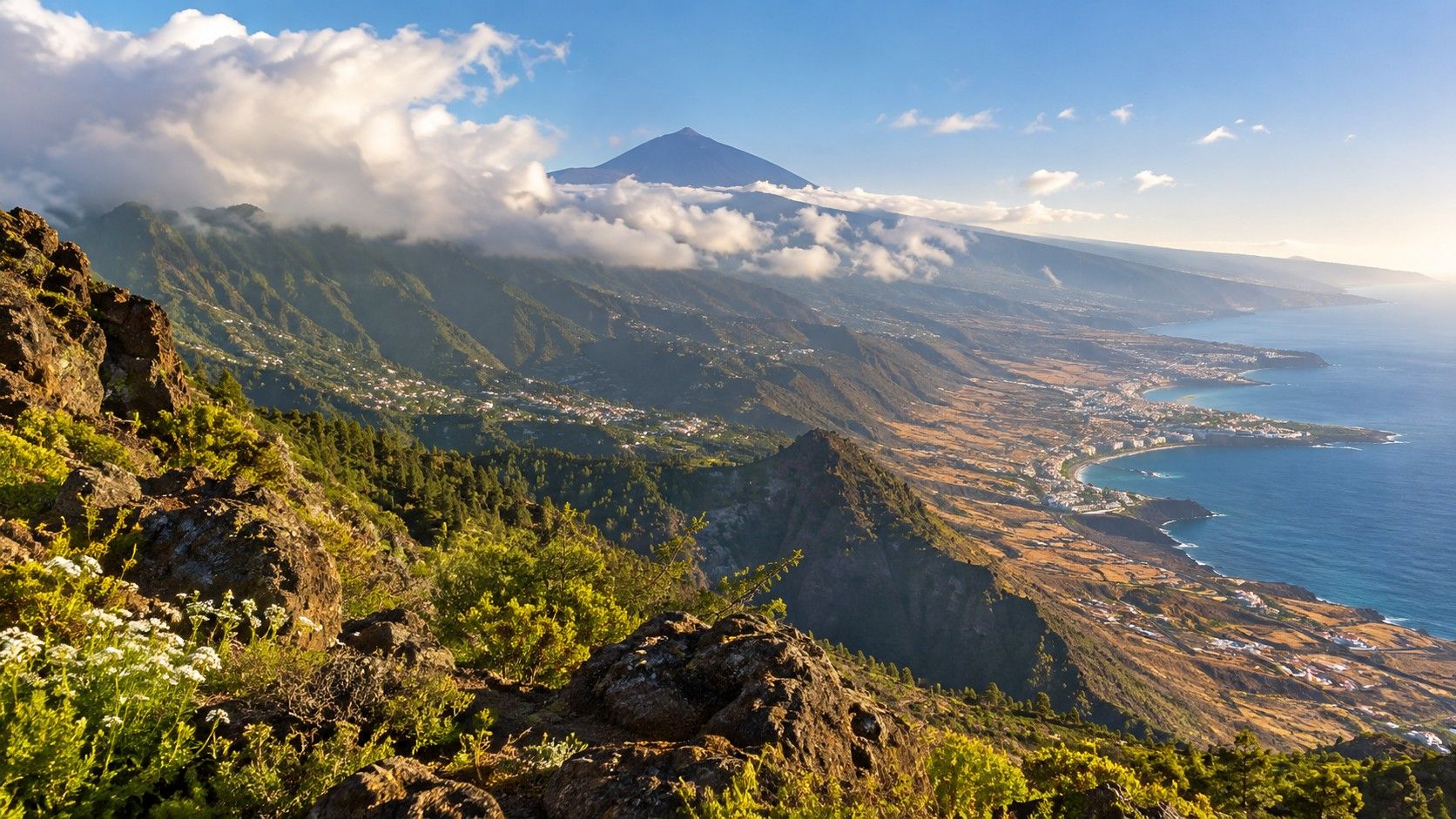
Tenerife is tall enough to make its own weather feel personal. The trade winds often arrive from the northeast, pick up moisture and meet the island slopes. That is why the north can carry cloud and greener hills while the southern coast stays drier and brighter. The shift can be visible from a road viewpoint: one side washed in sun, another side wearing a low grey lid.
This matters because distances on Tenerife look modest. A day trip from Costa Adeje to La Laguna or Puerto de la Cruz may sound too short for a weather change, yet you can leave in sunglasses and arrive under cloud with cooler air. None of this ruins a trip. It simply punishes lazy planning. If the day depends on a beach mood, check the beach area. If it depends on walking streets, cloud may even help.
The sunnier southern resorts
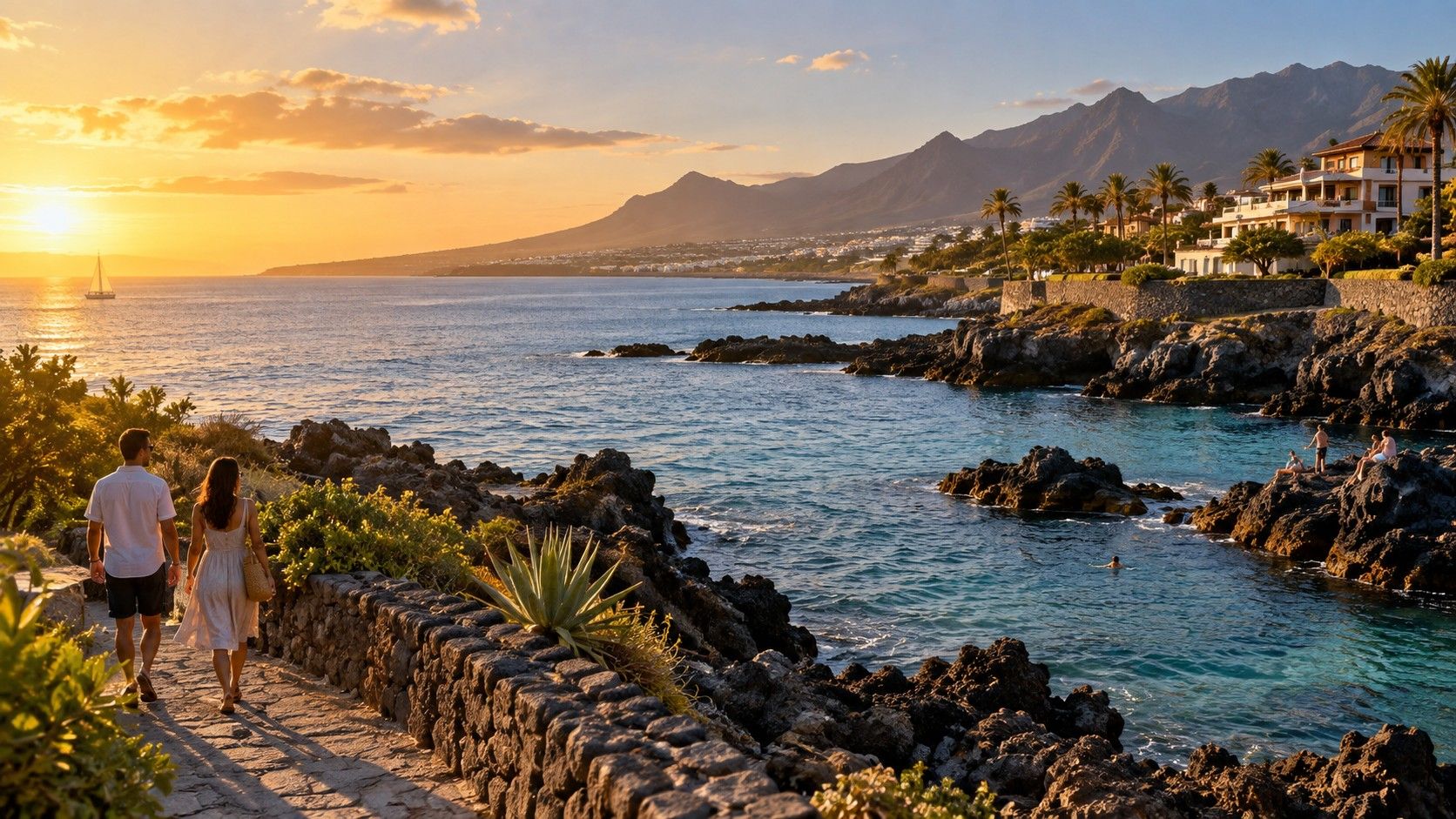
The southern resort belt, including Costa Adeje, Playa de las Americas and Los Cristianos, is the easiest weather choice for many visitors. It tends to be drier, brighter and more predictable for pool days. The air can feel warm even when the breeze is moving, and evenings often stay comfortable enough for open terraces. For a first trip where the priority is simple sun, this side removes a lot of doubt.
The trade-off is exposure. Some southern streets feel designed around cars, hotel walls and open pavements, so heat and glare build up in a way a forecast number does not explain. A short walk along the coast is pleasant when the breeze is right and oddly tiring when it is not. I pay attention to shade before distance. A ten-minute walk with cover can beat a five-minute one across bare concrete.
Wind is the detail people notice late. On a calm morning, the beach feels effortless; by afternoon, a more exposed stretch can turn restless. If you are choosing between beaches, look at shelter and orientation rather than assuming all southern beaches behave the same. For families, older travelers or anyone carrying half a room in a beach bag, that small difference matters.
The greener north around Puerto de la Cruz
Puerto de la Cruz and the north coast have a different temperament. The air often feels softer, the landscape greener and the sky more changeable. Cloud does not mean bad weather by default. On a warm day, it can make walking the seafront, climbing town streets or sitting outside at lunch far easier than doing the same thing under a hard southern sun.
The problem starts when visitors book the north for a pure sun-and-pool holiday. The north can deliver sunny hours, sometimes plenty of them, but it asks for a looser attitude. A morning may begin grey and open later. A viewpoint may be clear while the town below is muted. If a single cloudy spell will feel unfair, I would stay south and visit the north as a day trip.
For travelers who like towns, gardens, local life and cooler walking conditions, the north can be more comfortable. La Orotava and La Laguna also make more sense when the sky is not blazing. White walls, stone streets and uphill lanes become less theatrical and more usable when cloud takes the edge off the heat.
Teide and the altitude problem
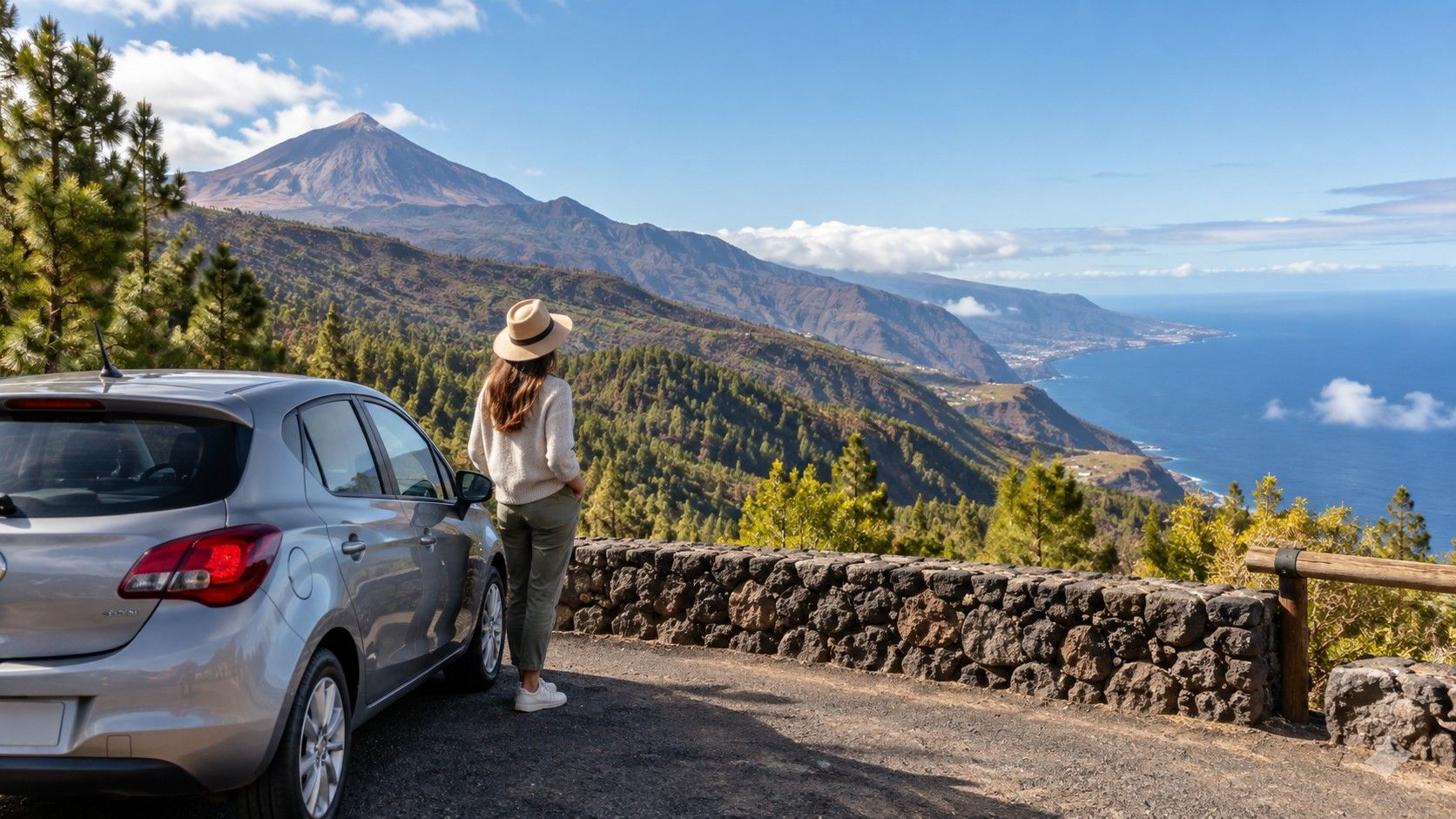
Teide is the part of Tenerife where a standard resort forecast becomes almost comic. Altitude changes the air, the wind and the way sunlight feels on skin. You can leave a warm beach in a T-shirt, drive through pines, reach the high plateau and suddenly wish you had brought a layer. The sun may be fierce, yet the breeze has a cooler bite.
Anyone driving to Teide should treat the mountain as a separate weather zone. Shoes matter on gravel viewpoints. Sunglasses matter because the light can be harsh. A light jacket matters because standing still at altitude is different from stepping out of a warm hotel. I have seen visitors do the brave face for five minutes, take the photo, then retreat to the car with the enthusiasm of people who learned something cheaply.
Cloud can also sit below, above or around the route. Sometimes the coast is hazy while the high road opens into bright air. Sometimes the opposite happens and the mountain plan feels less rewarding than expected. I would never build a Teide day from a resort forecast alone. Check a Tenerife meteo source for altitude and wind, then keep the plan flexible enough to move the mountain visit by a day if visibility looks poor.
How to use a forecast sensibly
The useful forecast habit is comparing areas. Look at your base, the place you plan to visit and the altitude if Teide or high villages are involved. Temperature alone is a blunt tool. Cloud cover, wind and timing often decide whether a day feels easy. A cloudy north morning may be fine for La Laguna; the same cloud is disappointing if your only aim is a bright beach photo.
| Plan | Best weather check | Small caution |
|---|---|---|
| Beach day in the south | Wind, cloud and UV around the exact coast | A bright forecast can still be uncomfortable on exposed sand |
| Town day in the north | Cloud and chance of drizzle by town | Cloud may help walking, but bring a light layer |
| Teide drive | Altitude temperature, wind and visibility | Do not dress from the hotel balcony |
I also distrust forecasts that feel too neat for the whole island. Tenerife microclimates are not a travel myth; they are something you notice while moving. A plan that allows one swap is usually enough. Put the beach day on the clearer coast, move the town day into cloud, and save Teide for visibility rather than forcing it into the only open slot.
Choosing a base by weather, not by wishful thinking
Choose the south if you want the simplest relationship with the weather in Tenerife. It suits beach-first trips, winter sun expectations and travelers who would rather accept busy resort life than gamble on cloud. Costa Adeje is comfortable for this because logistics are easy: beaches, restaurants, taxis and excursions sit close together, which matters when heat makes small errands feel larger.
Choose the north if you want a greener, more lived-in base and you will not sulk at a cloudy morning. Puerto de la Cruz works for people who like walking, cafes, sea air and a less polished holiday rhythm. It is still Tenerife, still mild, still very usable, but it does not perform the same weather routine as the south coast every day.
Choose a mixed plan if weather is one part of the trip rather than the whole point. A few days south and a few days north can make the island feel larger and more honest. Add Teide as its own weather decision, not as an afterthought between lunch and dinner. That is the simplest way I know to stop Tenerife meteo from becoming a daily argument with your phone.