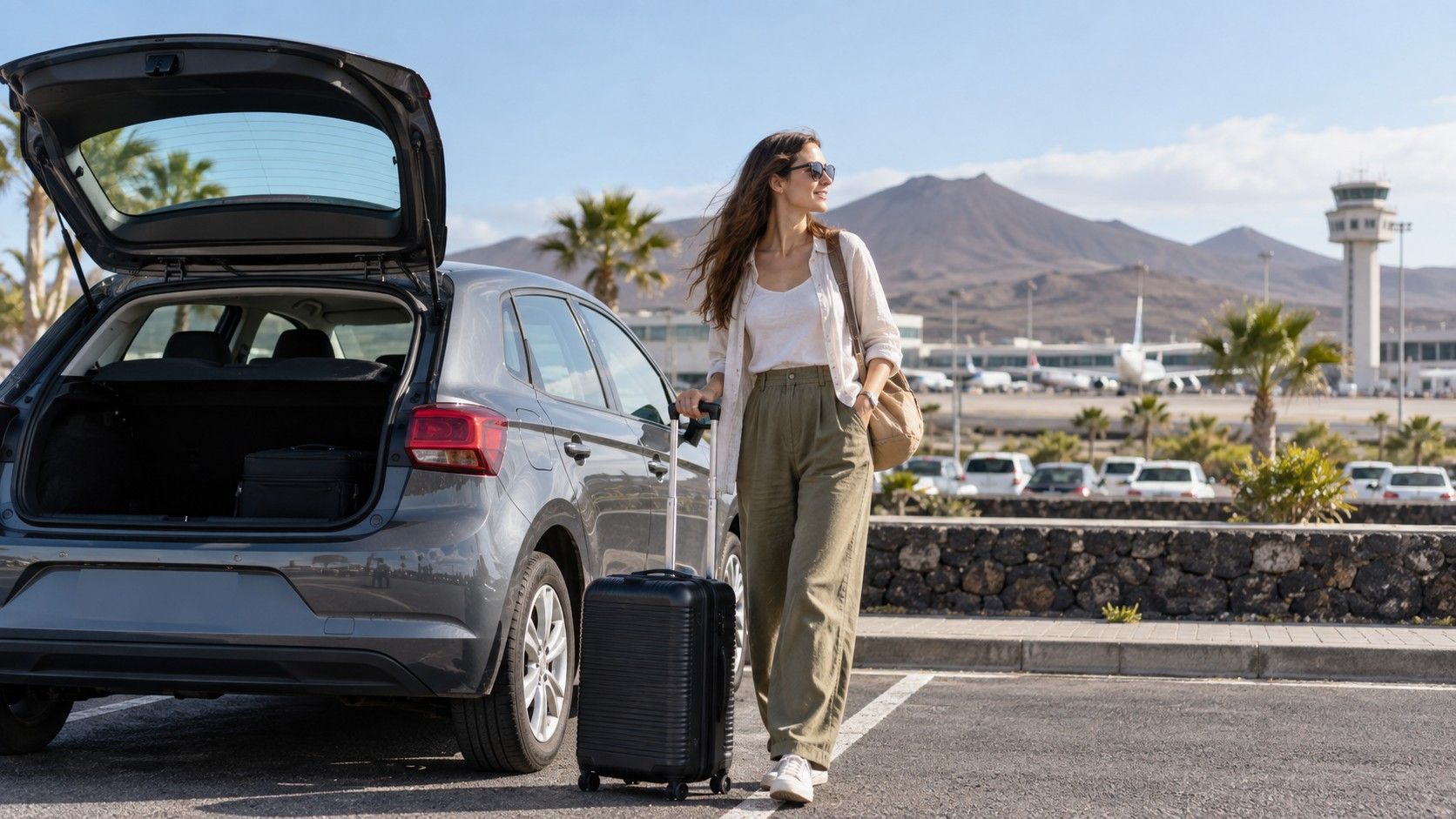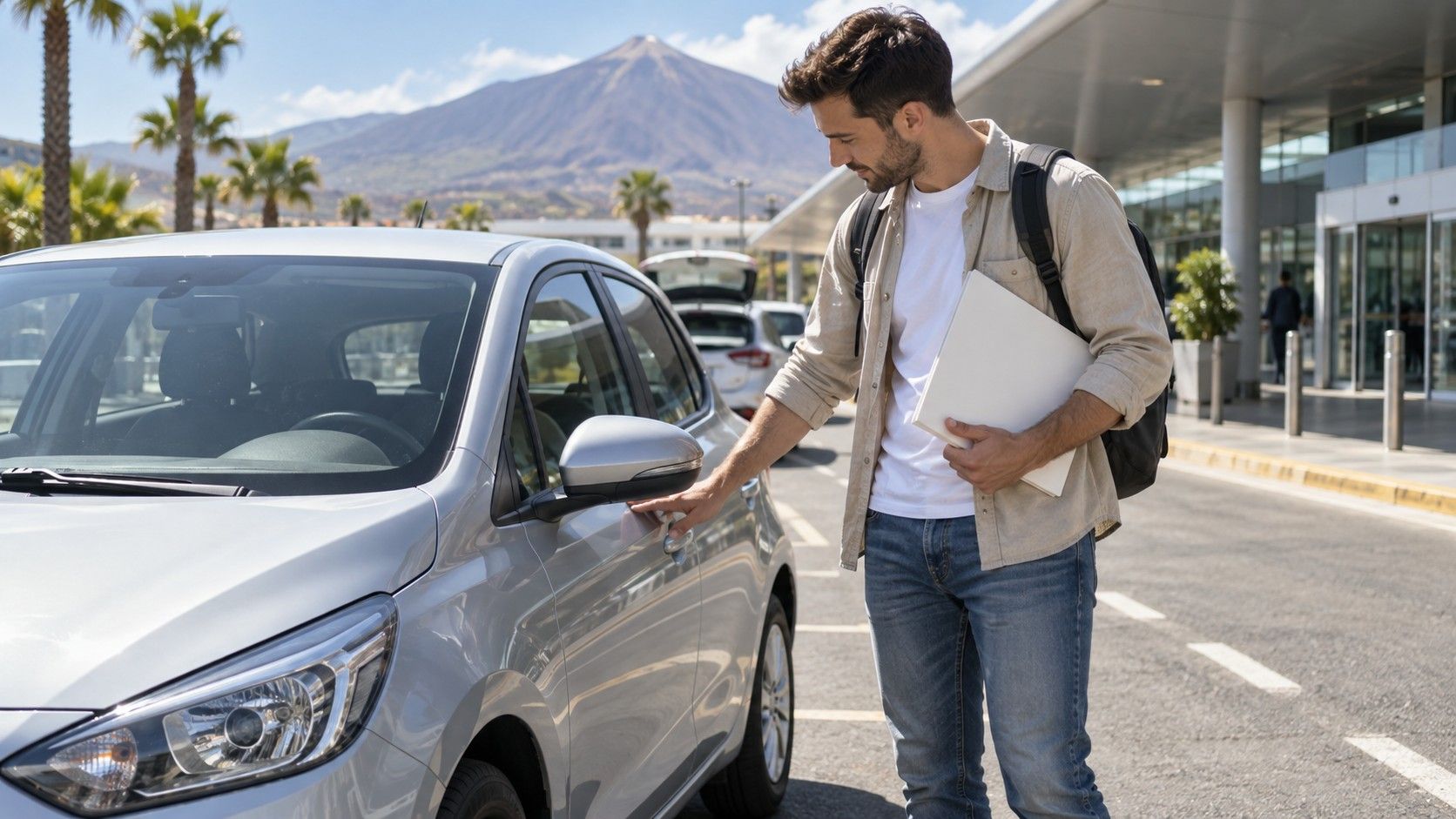
What do I need to hire a car in Tenerife is the right question to ask before you are standing at a rental desk with a queue behind you. The answer is mostly ordinary: licence, ID, card, booking details and enough attention to read the conditions. The trouble starts in the gaps between those words, especially around deposits, insurance, extra drivers and small print that looked harmless at home.
The basic documents
For most visitors, the core bundle is a valid driving licence, passport or national ID, booking reference and payment card. I would keep them together in hand luggage, not buried under beach shoes in a checked case. A rental desk works best when the papers are ready, and slow when everyone treats it as a luggage sorting area.
The driving licence needs to be current, readable and in the name of the person collecting the car. If the booking names one main driver, that person should be present with their own licence and card. It sounds painfully obvious until a couple arrives with one person ready to drive and the other holding the payment card. Some desks solve that gracefully. Others follow the rule and let the holiday mood drain out of the room.
If your licence is not in a format commonly accepted in Spain, check whether an international driving permit or translation is needed before travel. Do not leave that question to the arrival hall. Tenerife is relaxed in many ways; contract paperwork is less poetic. The desk agent may be friendly and still unable to hand over keys if the documents do not match the rental terms.
Driver age and licence questions
Age rules vary by provider, car category and insurance package. Younger drivers may face restrictions or extra fees, and some higher-category vehicles may have stricter conditions. I avoid quoting fixed numbers because they change between companies and rates. The useful move is to check the named driver’s age against the exact booking before paying, then again before travelling.
Licence age can matter too. A person who has a valid licence but has held it only recently may not qualify for every rental rate. This is where a cheap offer can turn slippery. If the trip depends on a car for airport pickup, mountain villages or family logistics, do not rely on a hopeful reading of the rule. Ask the provider in writing or choose a rate that states the requirement plainly.
| Question | Why it matters | What I would check |
|---|---|---|
| Who is the main driver? | The contract, card and licence may need to match | Name on booking, licence and card |
| Is the driver old enough? | Some rates add restrictions or fees | Provider rule for the chosen car group |
| How long has the licence been held? | New drivers may be excluded from some rentals | Minimum licence period in the terms |
| Are extra drivers allowed? | Unlisted drivers may not be covered | Add them before leaving the desk |
Extra drivers are worth settling at collection, not later in a car park conversation. Tenerife looks compact, but a day that includes Teide, the north coast and a return to the south can tire one driver. If two people will share the wheel, put both on the contract. A verbal family agreement does not help much if there is a damage claim and the wrong person was driving.
Cards, deposits and insurance
The payment card is often the point where confidence collapses. Many rentals require a credit card in the main driver’s name for a deposit or pre-authorisation. Some companies accept debit cards on certain rates, especially with added coverage, but this is not something to guess. Read the condition attached to your exact booking. A card that works for hotel rooms and restaurants may still be rejected for a hire car deposit.
Insurance language deserves a slow read. Basic cover, excess, deposit, waiver and roadside assistance are not interchangeable phrases. I usually look for three things: how much money can be blocked on the card, what damage the driver remains responsible for, and what is excluded. Tyres, glass, underbody and lost keys are the classic small-print areas. They are boring until they become expensive.
Do not buy extra insurance only because a desk conversation becomes uncomfortable, but do not reject it automatically to look savvy. Decide before arrival what level of risk you are willing to carry. If you already bought separate excess cover, keep the documents handy and understand that the rental company may still block a deposit. Reimbursement insurance and desk waivers can behave differently when something goes wrong.
Extras to settle before collection
Child seats, second drivers, automatic transmission, larger boot space and late collection all belong in the booking stage if they matter. Tenerife roads can be steep, parking bays can be tight and luggage always seems larger once it reaches the car. A tiny vehicle may be perfect for two careful packers and miserable for a family with pushchair, beach bags and three hard suitcases.
Child seats are the extra I would never leave to a casual promise. Confirm the size category and inspect the seat before leaving. If the seat looks tired, awkward or wrong for the child, deal with it there. Nobody wants to discover the problem halfway to Costa Adeje while the child is asleep at the wrong angle and the driver is trying to remember which exit comes next.
Automatic cars should also be confirmed clearly if the driver is not comfortable with manual transmission. Tenerife has enough hills and tight streets to make a reluctant manual driver unhappy. If the booking says automatic, check the car before signing away attention. A polite correction at the bay is easier than grinding through the first roundabout in a car you did not want.
A five-minute handover routine
The handover is where a calm traveler beats a fast traveler. Walk around the car, photograph existing marks, check wheel rims and bumpers, record fuel level and mileage, and make sure the contract reflects obvious damage. I include mirrors and lower doors because those are the areas that seem to collect other people’s parking habits.
Inside, check air conditioning, warning lights, seat belts, child seats and whether the fuel cap opens in a way you understand. That last detail sounds comic until you are standing at a petrol station with a queue forming behind you. I also set the first route before moving the car. The first minutes in an unfamiliar vehicle should be boring, especially around airport exits and resort traffic.
If something feels wrong, stay parked and ask. A dashboard warning, missing parcel shelf, damaged tyre or incorrect fuel reading is easier to discuss before the car leaves the bay. Taking keys is not a vow of silence, but it does make every later conversation more complicated. Five minutes of mild fuss can save a week of background irritation.
What I would decide before booking
Before choosing a Tenerife car rental, I would decide who drives, whether a credit card is available in that person’s name, how much deposit feels acceptable, whether extra cover is worth it, and what size car the trip genuinely needs. Then I would compare companies on those points rather than sorting only by headline price. Cheap is useful when the rules also fit your situation.
The car itself should serve the trip. A south-coast resort stay with one supermarket run does not need the same vehicle as a week of rural houses, Teide roads and north-coast day trips. If parking worries you, smaller is often better. If luggage or child seats dominate the plan, false economy becomes visible before the first roundabout.
So the honest answer to what do I need to hire a car in Tenerife is less glamorous than most travel planning: correct documents, a usable card, clear insurance choices and the patience to inspect the car properly. Get those pieces right and the car becomes what it should be, a tool for reaching beaches, villages and viewpoints without turning every transfer into a negotiation.